
Free tool
The Source Test Card
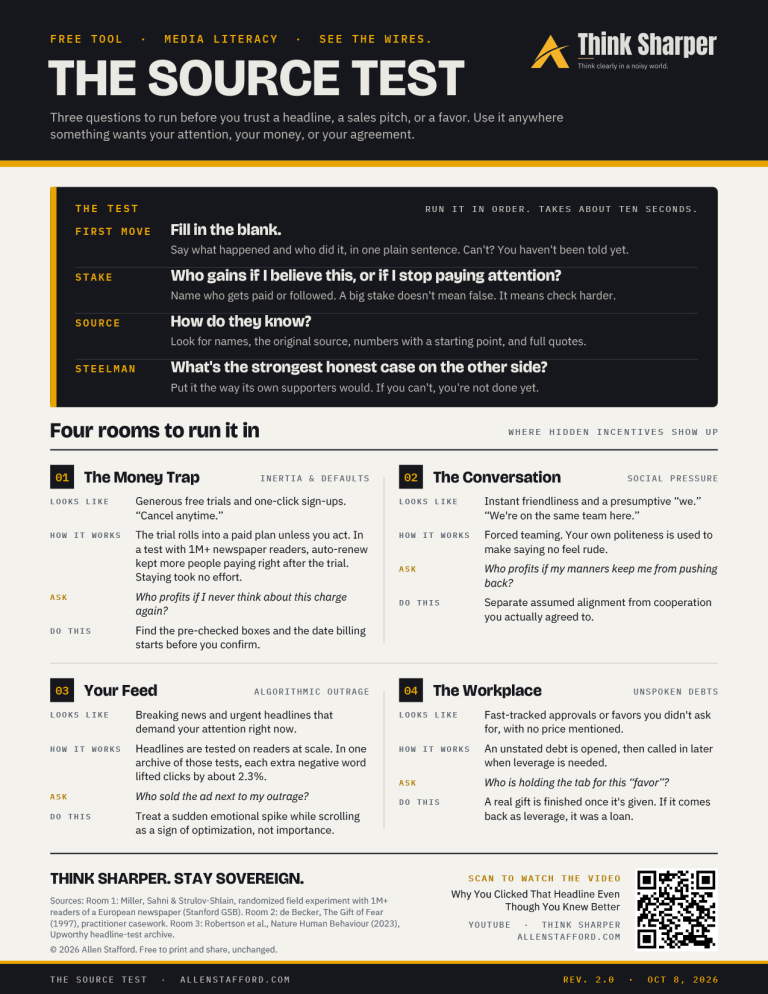
Three questions to run before you trust a headline, a post, or a claim, on one printable page.
 Allen Stafford
Grab your copy
One page. Print it, or keep it on your phone for the next headline, ad, or post that wants you to believe something.
Download the PDF No email required.What's inside
- Step zero: the fill-in-the-blank check that tells you if a headline has told you anything at all
- Stake: who gains if you believe it, and whether they get paid even if it's wrong
- Source: how they know, and the three warning signs of a claim with nothing behind it
- Steelman: the strongest honest case on the other side, and how to tell if you've really found it
- A worked example: the famous garlic headline run through all four steps
- A QR code that opens the video where the test is explained
- One page, US Letter, prints fine in black and white
Summary
This is a free one-page card. It helps you check a headline or a post before you believe it or share it. First, say in one sentence what happened and who did it. Then ask three questions: who gains if I believe this, how do they know, and what would the other side say?
You’ve read a headline, felt sure of it, and found out later there was nothing behind it. Nobody lied to you, exactly. You just took the claim at face value because checking felt like too much work.
This card makes checking quick. It starts with one move that catches most bait before you click: say in one plain sentence what you’re being told, what happened and who did it. If you can’t, you haven’t been told anything yet.
Then three questions we use on this channel before trusting any claim. Stake: who gains if you believe it? Source: how do they know? Steelman: what’s the strongest honest case on the other side? Each one comes with what to look for and the warning signs that mean keep checking.
The full walk-through, with the research behind it, is in the video.
How to use it
Save it to your phone or pin a printout near where you read the news.
Before you click or share, say in one plain sentence what happened and who did it. If you can't, you haven't been told yet.
Name who gets paid, clicked, or followed if you believe it. That tells you how hard to check.
Look for names, the original source, numbers with their starting point, and full quotes.
Put the opposing view the way its own supporters would. If you can't, keep checking.
Other free tools
 Allen Stafford
One tactic, one tool, every week
The newsletter walks through each piece in a few minutes of reading. Free, and easy to leave.

