
The Thatcher Effect: Why You Can’t See What’s Wrong With This Face
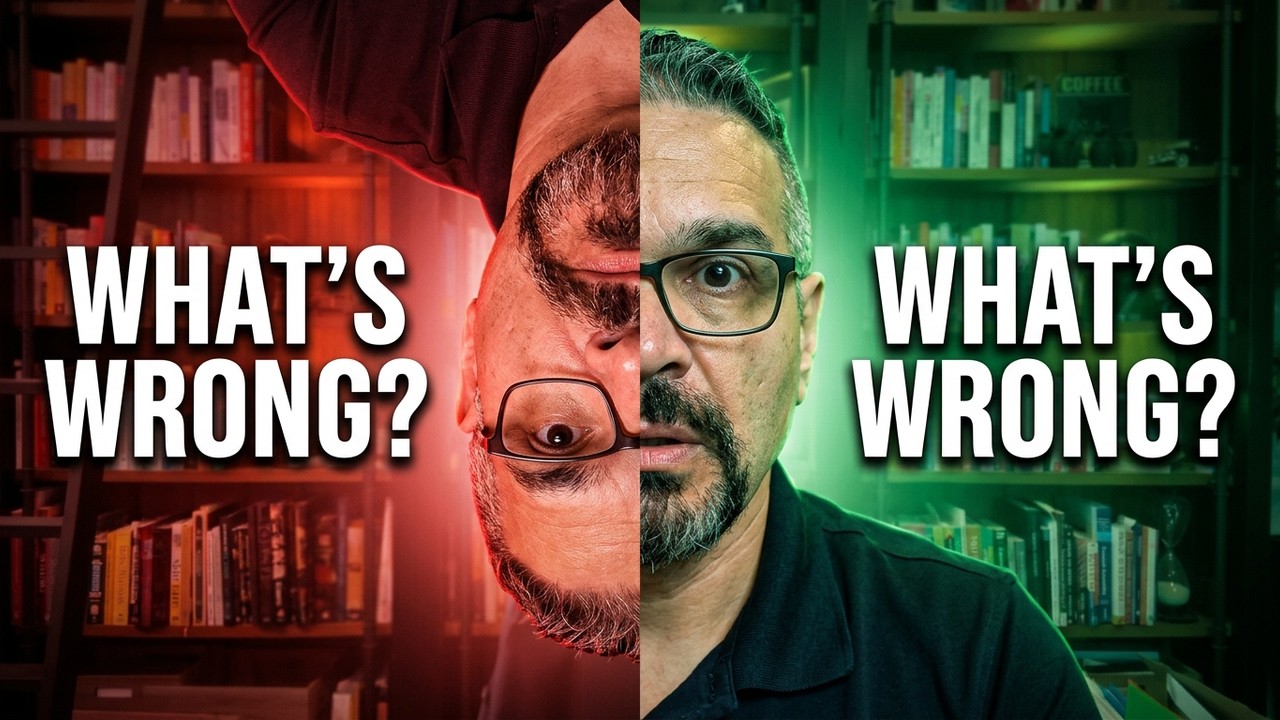
Two illusions you'll fall for, where the same trick shows up at checkout, and a two-move check called the Flip Test.
The short version
- Upside down, a face with its eyes and mouth flipped can look normal, because you check the parts one at a time and each part passes.
- Sellers use the same gap: show a friendly first price and add the fees at checkout. In a randomized test on StubHub, buyers who saw fees late spent about 21% more.
- The Flip Test is two moves: cover the friendly part that's doing the work, then turn the whole thing into your format, one total for a deal, or a swapped label for an argument.
Here’s a strange one. Show people two photos of the same face, both upside down. One is a normal photo. In the other, the eyes and mouth have been cut out and flipped. Most people say the two look about the same. Turn them right side up, and the edited face looks wrong instantly. You looked straight at the problem, and it seemed fine.
You’ve done the same thing with something that cost real money. You read the offer, every piece of it looked fine, and you said yes. Then the first bill showed up and turned the whole thing right side up.
I spent 30 years in marketing building offers like that, so I’ve sat on the side of the table that decides which part of a deal you see first. Here’s why the trick works on your eyes, where the same move shows up at checkout and in arguments, and a two-move check called the Flip Test.
The upside-down face test
A psychologist named Peter Thompson first showed this in 1980. He used a photo of Britain’s prime minister at the time, Margaret Thatcher, which is why researchers still call it the Thatcher effect. It works on any face, which is why the video uses mine.
Why every part passes
When a face is right side up, you take it in as a whole. You don’t check the eyes, then the nose, then the mouth. You see how they all sit together, and when one part is turned the wrong way, the whole face looks wrong right away.
Turn the face upside down and that whole-face check gets much weaker. You fall back to looking at the parts one at a time. On their own, those parts looked normal, because the flipped eyes and mouth were sitting right side up on the screen. Each part passed, and nothing checked the whole.
To be honest about it, researchers still argue about exactly why this happens, and some think part of it comes from a later judgment step, after the seeing is done. What nobody argues about is the result: turn the picture over, and an obvious problem gets past you.
The checkout version
A photo of a face costs you nothing. It starts costing you money the moment someone else decides which part of a price you see first.
In 2015, StubHub, the ticket site, ran an experiment on its own customers. Millions of buyers in the U.S. were split at random into two groups. One group saw the full price of a ticket, fees included, from the first page. The other saw the ticket price first and the fees only at checkout. Same tickets, and the same total at the end. The group that saw the fees late spent about 21% more, and they were about 14% more likely to buy at all.
That’s the Thatcher effect at a checkout. The ticket price is the part you check, and it looks right. The total is the whole, and by the time it shows up, you’ve already decided.
The fair point on the other side: a lower first number makes it easier to browse and compare, and the total does appear before you pay. The catch is when it appears. You check the whole after you’ve already made up your mind.
The question test
Answer this as fast as you can: how many animals of each kind did Moses take on the ark?
Most people say two. Moses didn’t build the ark. Noah did. Researchers call this the Moses illusion. In the first study of it, in 1981, people answered questions like this one without noticing the wrong name about half the time, and these were people who knew the real story. Every other piece of the question sounded familiar, so the wrong piece rode along with the rest.
When the label is your team
The familiar part can also be the name of your own team. In 2003, a psychologist named Geoffrey Cohen ran a study with college students who described themselves as liberal or conservative. He asked them to judge a welfare plan. One version was generous, and one was strict.
With no labels, people judged the way you’d expect: liberals liked the generous plan, conservatives liked the strict one. Then Cohen told them which party backed the plan, and that one label beat everything else. Liberals backed the strict plan when told Democrats supported it. Conservatives backed the generous plan when told Republicans supported it. Asked about it afterward, they said the label hadn’t affected them.
It ran in both directions, so nobody gets to read this and decide it’s only the other side. One honest note: this is an older study with college students, so treat it as a clear demonstration of the move, not a measurement of everybody.
The Flip Test
I put this on a free one-page card you can print or keep on your phone: The Flip Test Card.
Move one: cover the smile. When something gives you that quick feeling of yes, ask which one or two pieces are doing the work. Maybe it’s a low first price, or the name of a group you already trust. Cover those up in your head and look at what’s left.
Move two: turn it right side up. Put the whole thing in your format instead of theirs. For a deal, that means one number: the total you’ll pay from start to finish, fees and renewals included. For an argument, it means swapping the label. Keep everything about the plan the same, and change who’s behind it to a group you don’t trust. If your answer changes, the label was doing your thinking.
Two moves, about ten seconds, and you’re looking at the whole face instead of the parts.
When the shortcut is fine
Checking parts instead of the whole is usually fine. Most familiar things are safe, and if you checked every receipt and every sentence from scratch, you’d never get through a day. Save the Flip Test for the moments when someone else picked which part you’d see first, and your money or your vote is on the line.
I learned this one the hard way. My first job out of college was as a case manager, approving medication reimbursements on injury claims. One day I looked at the total, read a few of the medications, saw the list had been approved before, and approved it. My supervisor caught it: one of those medications had nothing to do with the injury. I should have held every medication up against the doctor’s report. The report was the whole face, and I only checked the parts.
Questions people ask
What is the Thatcher effect?
It’s an illusion where a face with its eyes and mouth flipped upside down looks almost normal when the whole picture is upside down, then looks grotesque the moment it’s turned right side up. Psychologist Peter Thompson first showed it in 1980.
Why is it called the Thatcher effect?
Peter Thompson’s original 1980 demonstration used a photo of Margaret Thatcher, Britain’s prime minister at the time. The name stuck, but the effect works on any face.
Why don’t we notice the flipped eyes and mouth upside down?
Upright, people judge a face as a whole, so one part turned the wrong way stands out. Upside down, that whole-face check weakens and people look at the parts one at a time, and each flipped part looks normal on its own. Researchers still debate the exact reason, but the result is well established.
Do hidden fees make people spend more?
In a randomized test on StubHub with millions of U.S. buyers, people who saw ticket fees only at checkout spent about 21% more and were about 14% more likely to buy than people who saw the full price upfront. The tickets and the final total were the same.
What is the Moses illusion?
It’s the tendency to answer “How many animals of each kind did Moses take on the ark?” without noticing that it was Noah, not Moses. In the first study, in 1981, people missed the wrong name about half the time, even when they knew the story.
Sources
- Thompson, P. (1980). Margaret Thatcher: A new illusion. Perception 9(4), 483–484.
- Bartlett, J. C. & Searcy, J. (1993). Inversion and configuration of faces. Cognitive Psychology 25(3), 281–316.
- Blake, T., Moshary, S., Sweeney, K. & Tadelis, S. (2021). Price salience and product choice. Marketing Science 40(4).
- Erickson, T. D. & Mattson, M. E. (1981). From words to meaning: A semantic illusion. Journal of Verbal Learning and Verbal Behavior 20(5), 540–551.
- Cohen, G. L. (2003). Party over policy: The dominating impact of group influence on political beliefs. Journal of Personality and Social Psychology 85(5), 808–822.
Did you spot the changed face before the photos turned over? Yes or no.
Read the full transcript
Don't tilt your head and don't turn your phone. Here are two photos of my face, both upside down. You've got five seconds. Which one has been changed? See, most people say they look about the same. Now watch what happens when I turn them over. Same two photos, nothing was swapped during the turn. On the right, my eyes and my mouth were cut out and flipped upside down the entire time. Right side up, you saw it instantly. Upside down, you looked straight at it and it seemed fine. So tell me honestly in the comments, yes or no, did you spot it before I turned the photos over? Here's why that matters past a party trick. Okay, so you've done the same thing with something that costs real money. You read the offer, every piece of it looked fine, and you said yes. Then the first bill showed up and turned the whole thing right side up. I'm Allen Stafford, and I help people think clearly in a noisy world, and this is Think Sharper. I spent 30 years in marketing building offers like the ones you're about to see. And I hold an MBA and a certification in applied neuroscience. So I've sat on the side of the table that decides which part of a deal you see first. Here's what you're walking out of this video with: a two-move check called the Flip Test. So the next deal or argument that looks fine in pieces gets checked as a whole before you even say yes.
A psychologist named Peter Thompson first showed this in 1980. He used a photo of Britain's prime minister at the time, which was Margaret Thatcher, which is why researchers still call it the Thatcher Effect. See, it works on any face, and that's why I chose my face. Here's the simple version, though, of what happened. When a face is right side up, you take it in as a whole, an entire face. You don't check the eyes, then the nose, then the mouth. You see how they all sit together. And when one part is turned the wrong way, the whole face looks wrong right away. Turn the face upside down, and the whole face check gets much weaker. See, you fall back to looking at the parts one at a time. And on their own, those parts looked normal because the eyes and mouth I flipped were, well, sitting right side up on your screen. Each part passed, and nothing checked the entire face, the whole thing. Now, I'll be honest about one thing. See, researchers still argue about exactly why this happens. Some think part of it comes from a later judgment step after the seeing is done. What nobody argues about is the result. Turn the picture over and an obvious problem gets past you. Now a photo of my face costs you absolutely nothing. It starts costing you money the moment someone else gets to decide which part of a price you see first.
Here's the real test of this. See, in 2015, StubHub, the ticket site, ran an experiment on its own customers. Millions of buyers in the U.S. were split at random into two groups. One group saw the full price of a ticket and fees included from the very first page. The other group saw the ticket price first and then the fees only at checkout. Same tickets and the same total at the end. Now the group that saw the fees late spent about 21% more, and they were about 14% more likely to buy at all. That's the Thatcher Effect at a checkout. The ticket price is the part you check, and it looks right. The total is the whole, and by the time it shows up, you've already decided.
So let's run the Source Test on it, okay? First, the Stake. Who profits if you judge the parts instead of the whole? Well, the seller. And this experiment put a number on it, okay? The Source. Well, how do we know? A randomized test on real buyers spending real money, which is about as solid as this kind of evidence gets. And then the Steelman. What's the best case on the other side? Some buyers say a lower first number makes it easier to browse and compare, and the total does show up before you pay. You know, that's a fair point, okay? See, the catch is when it shows up. You check the whole after you've already made up your mind. Money is the easy version, because there's a total at the bottom of the page you can check. Okay? With opinions, there's no total at the bottom, so the familiar parts carry even more of the weight.
So let me show you on yourself one more time. Okay? I'm going to put one question on the screen. Answer it in your head as fast as you can. Go. Most people answer two. Read it again. See, Moses didn't build the ark, Noah did. Researchers call this the Moses illusion. In the first study of it back in 1981, people answered questions like this one without noticing the wrong name about half the time. And these were people who knew the real story. See, every other piece of the question sounded familiar, so the wrong piece rode along with the rest. Same move as the face, the parts pass, so the whole, well, never gets a real look.
Now here's where it gets personal, because the familiar part can be the name of your own team, your own side. See, in 2003, a psychologist named Geoffrey Cohen ran a study with college students who described themselves as liberal or conservative. He asked them to judge a welfare plan. One version was generous and the other one was strict. With no labels, people judged the plans the way you would expect. See, liberals liked the generous plan and conservatives liked the strict one. Then Cohen added one detail. He told them which party was backing the plan. That one label beat everything else. The liberals backed the strict plan when they were told Democrats supported it. And conservatives backed the generous plan when they were told Republicans supported it. And when Cohen asked them about it, they said, well, the label hadn't affected them. They thought it would affect other people. The party name was the familiar part. It looked right, so the rest of the plan passed without a real check, and notice that it ran in both directions. Nobody gets to watch this and decide it's only the other side. And one honest note on the evidence. See, this is an older study with college students, so treat it as a clear demonstration of the move rather than a measurement of everybody.
So here's the tool. I call it the Flip Test, and it has two moves, both taken straight from that photo of my face. Move one. Cover the smile. See, when something gives you that quick feeling of yes, ask which one or two pieces are doing the work. Maybe it's a low first price or the name of a group you already trust. Cover those up in your head and look at what's left. And move two, turn it right side up. See, put the whole thing in your format instead of theirs. So for a deal, that means one number, the total you'll pay from start to finish, with the fees and the renewals all tied into it. For an argument, it means swapping the label. Keep everything about the plan the same and change who's behind it to a group that you don't trust. If your answer changes, the label was doing your thinking. See, that's the whole thing. Two moves, about 10 seconds, and you're looking at the whole face instead of the parts. I've put the Flip Test on a free one-page card you can print or keep on your phone. It's at allenstafford.com, and I have the link in the description below.
Now the honest case for the shortcut. Checking parts instead of the whole is usually fine. See, most familiar things are safe, and if you checked every receipt and every sentence from scratch, you'd never get through a day. So save the Flip Test for the moments when someone else picked which part you'd see first and your money or your vote is on the line.
I learned this one the hard way. See, long before marketing, my first job out of college was a case manager, and part of the job was approving medication reimbursements on injury claims. One day, I had a list to pay. I looked at the total, read a few of the medications, and saw the list had been approved before, so I approved it. My supervisor caught it. One of those medications had nothing to do with the injury. Someone before me had approved it by mistake, and I carried their mistake forward because it looked familiar. What I should have done was hold every medication up against the doctor's report. The doctor's report was the whole face, and I only checked the parts. So the next time something looks fine in pieces, turn it over before you say yes. Think Sharper. Stay Sovereign.
More from Think Sharper

One tactic, one tool, every week
The newsletter walks through each video in a few minutes of reading. Free, and easy to leave.