
How to Not Be Manipulated: 4 Habits of People Who Rarely Fall For It
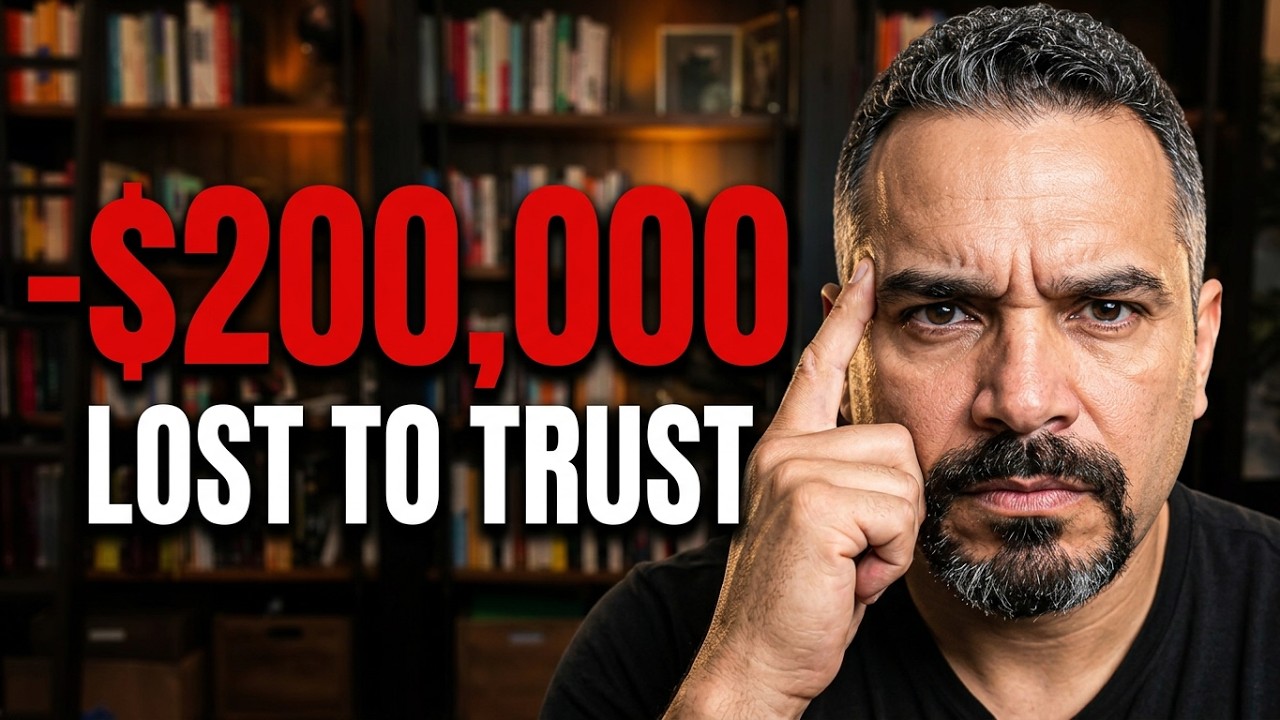
Four habits, the research behind each one, and the $200,000 lesson I learned the hard way.
The short version
- Almost everyone thinks persuasion works better on other people than on them, and that belief is what makes people easy to fool.
- The people who rarely get played assume they can be fooled, judge an ask apart from any gift, ask who benefits, and never decide on someone else's clock.
- When anyone pushes you to decide right now, say "I'll get back to you tomorrow." A good offer survives a day.
You’ve seen the story. Someone wires money to a fake grandson, or reads their bank password to a stranger on the phone, and the thought shows up right on cue: I’d never fall for that.
I thought that too. In 2002, a business partner took more than $200,000 from me. By then I’d spent years building persuasion campaigns for a living. I knew exactly how people get played, and I still didn’t see it coming.
Here’s what I’ve learned since about the people who rarely get played. None of it requires being a genius or suspicious of everybody.
The blind spot almost everyone has
Try this. On a scale of one to ten, how easy are you to manipulate? Now, how easy is the average person?
If your second number is higher, you’re in good company. Researchers call it the third-person effect: almost all of us believe persuasion works better on other people than it does on us. It’s one of the most consistent findings in media research, and it’s exactly the opening a manipulator needs. If you’re sure it won’t work on you, you stop checking.
Habit 1: Assume you can be fooled
In 2002, a team of psychologists tried to teach people to resist ads that use a fake expert, someone who looks like an authority but has no real reason to know. In one ad, a model dressed as a stockbroker gave investment advice. Explaining the trick helped. But the people who became hardest to fool were the ones who were first shown that they had been taken in by the ad themselves.
Another study points the same way. In 2006, researchers gave the same money-knowledge quiz to investment fraud victims and to people who’d never been scammed. The victims scored higher. Knowing more didn’t protect them, and it may have made them more confident going in.
This isn’t about distrusting everyone. It just means you stop giving yourself an exemption. And if you’ve been fooled before, don’t bury it. That memory is some of the best protection you have.
Habit 2: Judge the ask on its own
In 1971, a psychologist paired volunteers with a man named Joe, who was secretly working for the researcher. In some sessions, Joe came back from a break with a Coke for the volunteer, unasked. Later, Joe asked them to buy raffle tickets. The people who got a Coke bought more, and it didn’t matter whether they liked Joe or not.
That pull to pay someone back is called reciprocity. You feel it after a free consultation, or when a salesperson says they’ve already taken something off the price just for you. The habit is one question: if the gift had never happened, would I still say yes?
Habit 3: Ask who benefits
This one is harder, because it’s usually aimed at people you trust. Before you act on advice, ask: if I believe this and act on it, who gains, and what do they gain? People can believe every word they tell you and still be the ones who profit.
My $200,000 lesson came from skipping exactly this question. Two friends and I had opened a marketing agency. We had clients but no building, so a friend of one of my closest friends gave us space above his print shop and came in as a silent partner. Everyone vouched for him. He printed all our client work at a small markup. A year and a half later, the money coming in and the money going out stopped adding up. We audited the books and found he’d been skimming our receivables.
More than one person had told me to watch the books. I didn’t, because he came recommended by someone I trusted. The answer to who benefits was written into our deal from day one. I just never asked.
Habit 4: Never decide on someone else’s clock
Your account will be frozen in an hour. The investment closes Friday. Rushing you is the move that shuts off the other three habits, because there’s no time to wonder whether you’re being fooled or who benefits. The Federal Trade Commission’s scam guidance puts it plainly: scammers want you to act before you have time to think. It also says something I’d put on every fridge: honest businesses will give you time to make a decision.
The one sentence
When anyone pushes you to decide right now, say: “I’ll get back to you tomorrow.”
It’s a no that doesn’t sound like a no, so you don’t need confidence or an argument to say it. It buys you the time the other habits need. And it’s a test. A good offer survives a day. If you get pressure, guilt or “this won’t be here tomorrow,” you’ve learned what you’re dealing with.
If the call might be a real emergency, like your bank, the move is the same, just faster: hang up and call the number on the back of your card.
The honest part
Sometimes the deadline is real. Sales end, and good apartments get rented by somebody else. But look at the trade. Wait a day and lose a real deal, and you’ve lost a deal. Don’t wait, and if it’s the other kind, you can lose a lot more.
Nobody is un-manipulable. The people who come closest know that about themselves, and give themselves a day.
Sources
- Davison, W. P. (1983). The third-person effect in communication. Public Opinion Quarterly 47(1), 1–15.
- Paul, B., Salwen, M. B., & Dupagne, M. (2000). The third-person effect: A meta-analysis of the perceptual hypothesis. Mass Communication & Society 3(1), 57–85.
- Sagarin, B. J., Cialdini, R. B., Rice, W. E., & Serna, S. B. (2002). Dispelling the illusion of invulnerability: The motivations and mechanisms of resistance to persuasion. Journal of Personality and Social Psychology 83(3), 526–541.
- Consumer Fraud Research Group for the NASD (now FINRA) Investor Education Foundation (2006). Investor Fraud Study Final Report.
- Regan, D. T. (1971). Effects of a favor and liking on compliance. Journal of Experimental Social Psychology 7(6), 627–639.
- Federal Trade Commission. How to Avoid a Scam. consumer.ftc.gov.
- Federal Trade Commission. The Cooling-Off Rule, 16 CFR Part 429.
What's the pressure line you've heard most?
Read the full transcript
In 2002, a business partner quietly took more than $200,000 from me. I'd spent years learning exactly how people get played, and I didn't see it coming.
So let's try something. On a scale of one to ten, how easy are you to manipulate? Hold that number. Now, how easy do you think it is to manipulate the average person? If your second number, the one where you think other people are easily manipulated, is higher than your first, you just did exactly what I did. Researchers have a name for it. It's called the third-person effect, and it means almost all of us believe persuasion works better on other people than it does on us.
Here's what you're walking out of this video with. The people who rarely get played share four habits, and none of them require you to be a genius or suspicious of everybody. You'll get the four habits, plus one sentence that stops almost any pressure play cold.
I'm Allen Stafford, and I help people think clearly in a noisy world. I spent 30 years building persuasion campaigns for a living, so let's start with the habit I didn't have.
All right, so habit one: people who are hard to manipulate assume they can be fooled. Now, that sounds backwards, so here's the study behind it. Psychologists tried to teach people to resist ads that use a fake expert, someone who looks like an authority but has no real reason to know. Explaining the trick actually helped. But the strongest results came when people were shown that they themselves had been taken in by one of those ads. That group became the most resistant of all.
Then there's this. Researchers working for the FINRA Investor Education Foundation gave the same financial knowledge quiz to investment fraud victims and to people who'd never been taken. The fraud victims actually scored higher. Knowing more didn't protect them, and it may have made them more confident going in. The pitch that works best on a smart person is the one that tells them they're too smart to need to check.
This habit has nothing to do with distrusting everyone. It just means you stop giving yourself an exemption. And the moment you're most likely to hand yourself that exemption is right after someone has been generous with you.
If a stranger hands you a free soda, does it make you more likely to spend money with them later? In 1971, a psychologist named Dennis Regan paired volunteers with a man named Joe, who secretly worked for the researchers. In some sessions, Joe came back from a break with a Coke for the volunteer, and in others he came back with nothing. Afterward, Joe asked them to buy raffle tickets. The people who got a Coke bought more tickets. But here's the detail that matters. Without the Coke, people bought more if they simply liked Joe. With the Coke, liking him stopped making a difference. One soda did the work on its own.
Psychologists call this reciprocity. When someone does something for us, we feel a pull to even the score, even if we never asked for the favor. You see it in the free consultation, or the salesperson who says they took something off the price just for you. So to beat this, you just ask one question: if the gift had never happened, would I still say yes to this? That question is easy with a stranger holding a Coke. But it gets a lot harder when the person asking is someone you already trust, because then you're not weighing a gift. You're weighing them.
Which brings us to habit three. They ask who benefits, even when the advice comes from someone they like. If I believe this and act on it, who gains, and what do they gain? That question feels rude with a friend, which is exactly why it matters. People can fully believe what they're telling you and still benefit from it.
I know this one personally. I lost over $200,000 to a business partner simply because I didn't ask one question. Years ago, two friends and I opened a marketing agency, and we had the clients but no building. A friend of one of my closest friends offered us space above his print shop and came in as a silent partner. Everyone vouched for him. He'd print all our client work at a small markup, and that's how he'd make his money. The business took off. But about a year and a half in, the money coming in and the money going out stopped adding up. We audited the books and found out he'd been skimming our receivables. By then, it was over $200,000.
I already knew exactly how borrowed trust worked. I just didn't think it was working on me. Here's what still stings. The answer to who benefits was written into our deal from day one. He made money every time our money moved through his shop. I just never asked the question.
Asking who benefits takes a minute of calm thinking, and the fourth play is built so you never get that minute. Habit four: they never make a decision on someone else's clock. The phone call says your account will be frozen in an hour. The friend says the investment closes Friday, so you'd better get in now. Urgency is the play that switches off the other three. When you're rushed, the other habits never get a turn. You don't stop to wonder whether you're being fooled, and you definitely don't stop to ask who benefits.
The Federal Trade Commission's scam guidance puts it in one line: scammers want you to act before you have time to think. And for certain sales made at your home or a temporary spot, federal law actually gives you three business days to cancel, because pressure in the room gets people to sign things they regret at home. Honest businesses will give you time to make a decision.
And there's one sentence that stops almost any high-pressure play cold in its tracks, and it doesn't require you to be rude. When anyone pushes you to decide right now, say this: "I'll get back to you tomorrow." It's a no that doesn't sound like a no, so you don't need confidence to say it. And it buys the time your brain needs to actually think.
It's also a test. A good offer survives a day. If the answer you get is understanding, fine. If the answer is guilt, or "this won't be here tomorrow," you just learned exactly what you're dealing with. Watch it work. "Your account will be frozen in an hour." Well, I'll get back to you tomorrow. "This investment closes Friday." Great, I'll get back to you tomorrow. If it's a real opportunity, it'll still be there the next day, or Thursday, or Friday, or whenever you say you're going to get back to them.
I put all four habits and that one sentence on a free one-page card you can print and keep by the phone. It's called the Hard-to-Fool Card, and the link is in the description below. Grab one for yourself, and one for someone you love who picks up every call.
Now, the strongest argument against all of this: sometimes the deadline is real. Sales do end, and good apartments get rented by somebody else. I'm not going to pretend otherwise. But look at the trade. If you wait a day and lose a real deal, you've lost a deal. If you don't wait and it turns out to be the other kind, you can lose a lot more. I know my version of that cost.
So here's the honest answer to the title. Nobody is un-manipulable. I'm not, and you're not either. The people who come closest are the ones who know that about themselves, and who give themselves a day to think.
Think Sharper. Stay Sovereign.
More from Psychological Manipulation
 10:33
Why You Buy More When You’re Sad (Impulse Buying Psychology)
 Why Empty Slogans Feel True (And a 10-Second Test to Catch Them)
Watch the full Psychological Manipulation playlist on YouTube →
One tactic, one tool, every week
The newsletter walks through each video in a few minutes of reading. Free, and easy to leave.