• Home
  • Think Sharper
  • The Second Myth
  • Toolkit Podcast
  • Free Tools
  • About
  • Newsletter
  • Menu Menu
Allen Stafford — Think Sharper
  • Link to LinkedIn
  • Link to Instagram
  • Link to Facebook
  • Link to Youtube

Tag Archive for: information overload

Blog

Strategic Ignorance: Why Smart People Ignore 99% of Information

We have been told a lie our entire lives. We are told that “Knowledge is Power.”

In 1995, that was true. When information was scarce, the person with the most facts won. But today, we live in an economy of infinite information. Basic economics tells us that when a resource becomes infinite, its value drops to zero.

The data isn’t the asset anymore. Your attention is the asset.

In the modern world, you don’t win by knowing more. You win by knowing less about the things that don’t matter, so you can dominate the few things that do. This is called Strategic Ignorance.

Here is why your brain physically breaks down under the current load, and the 5 Filters I use to protect my focus.

The Paradox of More Data

We instinctively crave more data because we think it reduces risk. We tell ourselves, “If I just read one more review, or check one more news source, I’ll make the perfect decision.”

This is the “More Data Paradox.” As a marketer for 30 years, I can tell you this is by design. When a consumer is overwhelmed with choices and data, they freeze. This is called Cognitive Overload. When you freeze, you look for a savior—a product, a guru, or a politician—to make the choice for you.

By trying to consume everything, you aren’t becoming informed. You are becoming compliant.

The Neuroscience of Noise

Let’s look at the hardware: your brain.

Your Prefrontal Cortex (PFC) is the CEO of your mind. It handles logic, decision-making, and willpower. But here is the catch: it has a very limited battery life.

Every time you process a Tweet, a headline, or an irrelevant email, you burn glucose. You are spending your “CEO energy” on janitorial tasks.

When your brain is overloaded, it physically cannot engage in Deep Thinking. It switches to “Survival Sorting.” You stop analyzing nuance and start looking for threats. This is why “doom-scrolling” feels exhausting but you can’t stop. You have overloaded the circuit, and your brain is now just looking for the off switch.
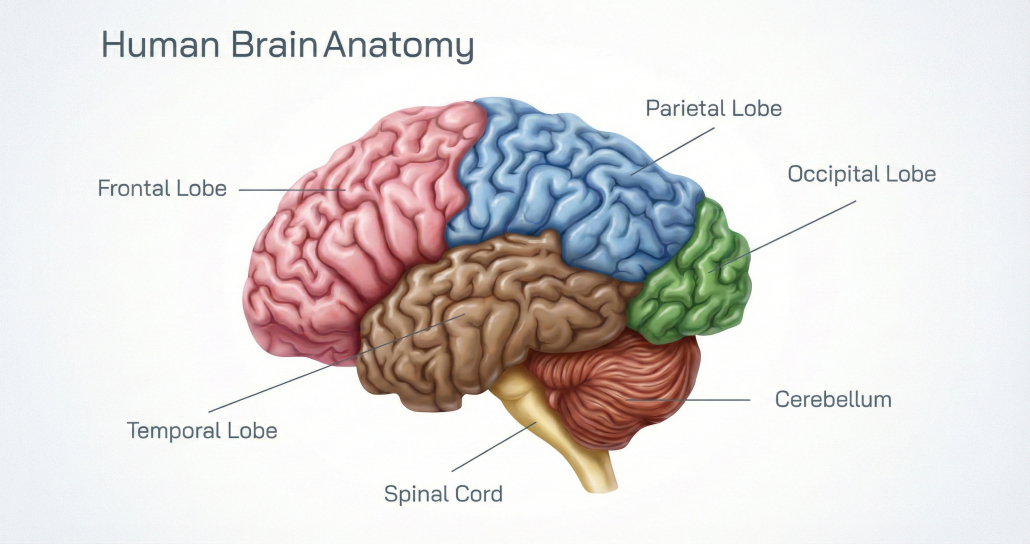
Human Brain Anatomy Illustration for Strategic Ignorance article

Strategic Ignorance vs. Laziness

Does this mean you should put your head in the sand? No. That is laziness.

  • Laziness is ignoring information because you don’t care.

  • Strategic Ignorance is ignoring information because it does not serve your objective.

Think of it like a diet. You don’t eat everything at the buffet just because it’s there. You select what fuels you.

We are entering an era where “Low Information” is a competitive advantage. You need to practice the “Spotlight Effect.” You must dim the lights on the 99% of noise so you can shine a massive spotlight on the 1% of signal that actually matters.

The 5 Filters of Relevance

How do we do this? You need a firewall for your mind. I use a system I call the “5 Filters of Relevance.”

1. The Expiration Test

Ask yourself: “Will this information matter in 6 months?”

If the answer is no, it is noise. Most breaking news, celebrity gossip, and Twitter outrage expires in 48 hours. If it won’t matter in December, don’t let it steal your energy in January.

2. The Action Gap

Ask yourself: “Does this information change what I am going to do in the next 24 hours?”

If knowing this information does not change your behavior, it is essentially trivia. It might be interesting, but it is not strategic.

3. The Vividness Trap

Psychologists call this the Availability Heuristic. Your brain judges risk by how scary a story is, not by how likely it is.

If a news report gives you a terrifying anecdote but no statistics, it is designed to hijack your Amygdala. The Rule: If it’s a story without data, ignore it. That’s entertainment, not information.

4. The Incentive Audit

The “Insider” rule is simple: Cui Bono? (Who benefits?)

Does the person telling me this profit from my panic? If a YouTuber, a politician, or a news anchor gets paid based on your engagement, they are incentivized to exaggerate. If the source has a financial motive to scare you, apply a 50% “Skepticism Tax” to everything they say.

5. The Circle of Control

This is pure Stoicism. Ask: “Can I vote on this, buy this, or fix this today?”

If the answer is “No,” then worrying about it is a waste of your biological battery. You can be aware of it, but do not let it enter your “Deep Processing” queue. Save that energy for the problems you can actually solve.

The Next Step: Get the Checklist

We have to get comfortable with not knowing. We have to get comfortable with people saying, “Did you hear about X?” and confidentially replying, “No, I didn’t.”

It requires courage to opt out of the machine. But the result is a brain that is sharper, calmer, and ready to solve actual problems.

I know you understand these filters right now. But in twenty minutes, the algorithm is going to try to hijack your brain again. You need a physical defense.

I’ve put all 5 Filters onto a single-page “Gatekeeper Checklist.” Download it, tape it to your monitor, and do not let information enter your mind without checking its ID first.

Stop hoarding data. Start cultivating wisdom.

DOWNLOAD THE GATEKEEPER CHECKLIST HERE

Frequently Asked Questions about Strategic Ignorance

What is Strategic Ignorance? Strategic Ignorance is the deliberate practice of filtering out irrelevant information to preserve cognitive resources for high-value decision-making. Unlike laziness (not knowing because you don’t care), Strategic Ignorance is a productivity protocol designed to prevent “Cognitive Overload” and decision fatigue in an information-rich environment.

How do I practice Strategic Ignorance? To practice Strategic Ignorance, apply the “5 Filters of Relevance” to any incoming information:

  1. The Expiration Test: Will this matter in 6 months?

  2. The Action Gap: Does this change my behavior in the next 24 hours?

  3. The Vividness Trap: Is this a scary story (anecdote) or actual data (statistics)?

  4. The Incentive Audit: Does the source profit from my panic?

  5. The Circle of Control: Can I vote on, buy, or fix this issue today?

Why does information overload lead to bad decisions? Information overload depletes the glucose levels in the Prefrontal Cortex (PFC), the part of the brain responsible for logic and willpower. When the PFC is exhausted, the brain shifts control to the Amygdala (the emotional center), leading to impulsive reactions rather than strategic choices. This state is known as “Decision Fatigue.”

January 23, 2026/by Allen Stafford
https://allenstafford.com/wp-content/uploads/2021/02/Allen-Stafford-Think-Sharper-Logo.png 0 0 Allen Stafford https://allenstafford.com/wp-content/uploads/2021/02/Allen-Stafford-Think-Sharper-Logo.png Allen Stafford2026-01-23 01:26:182026-09-23 09:35:31Strategic Ignorance: Why Smart People Ignore 99% of Information
Free Tools

The Gatekeeper Checklist

You open your phone to check one thing. Twenty minutes later you’ve read three breaking stories, a thread about a scandal you’ll forget by Friday and a review of something you weren’t going to buy. You don’t feel informed. You feel tired, and the thing you meant to do still isn’t done.

There’s more coming at you than anyone could sort, and a lot of it is built to feel urgent. More of it doesn’t make your decisions better, either. In one study, people predicting college football games grew more confident with every new batch of statistics, while their accuracy barely moved.

The Gatekeeper Checklist is five questions you ask before anything gets your attention. Will this matter in six months? Does knowing it change what I do in the next 24 hours? Is there a number here, or just a scary story? Who benefits if I believe it? Can I vote on it, buy it, or fix it? If it fails one, you let it go, and you don’t have to feel guilty about it.

The guide gives each filter its own page. You get where the idea comes from (the Lindy effect, decision science, the availability heuristic, the principal-agent problem and the Stoics), exactly when to use it and what to do with the answer. Each page also has a worked example and space to try it on your own feed. The last page is a one-page quick card to tape to your monitor. The guide is honest about which numbers are rules of thumb, and every study it mentions is listed at the end.

January 23, 2026/by Allen Stafford
https://allenstafford.com/wp-content/uploads/2021/02/gatekeeper-checklist-think-sharper.jpg 1650 1275 Allen Stafford https://allenstafford.com/wp-content/uploads/2021/02/Allen-Stafford-Think-Sharper-Logo.png Allen Stafford2026-01-23 00:56:312026-11-13 12:27:52The Gatekeeper Checklist

Tag Archive for: information overload

Media Literacy

Information Overload: 5 Filters That Protect Your Focus

You open your phone to check the weather. Twenty minutes later you’ve read two breaking stories, a thread about a fight between people you’ve never met and half a review of a product you weren’t going to buy. You still don’t know the weather. And you feel a little worse than when you picked up the phone.

We grew up hearing that knowledge is power. When information was hard to get, that was close to true, and the person who knew the most facts usually won the argument. Now information is everywhere, and most of it costs nothing to make. What’s scarce is your attention. So the skill that matters has changed. It used to be finding information. Now it’s deciding what to ignore.

More information, more confidence, same results

It feels like one more review or one more news source will finally make the decision safe. Research says that feeling is often wrong.

In a 2008 study, decision researchers asked people who knew college football well to predict the outcomes of real games. They didn’t see team names, just statistics, handed out in batches: six stats per team at first, then six more, and so on up to thirty. With each new batch, people grew more confident in their picks. Their accuracy barely moved. The extra information mostly made them feel surer.

That’s what I call the More Data Paradox. Past a point, more information stops making you more right and starts making you more certain.

In the video I said this is by design: overwhelm people with choices and they freeze, then hand the decision to a product, a guru or a politician. I’d pull that back. The research on “choice overload” is mixed. When researchers pooled 50 experiments with more than 5,000 people, the average effect of having more options was close to zero. Sometimes more options really do make people freeze, and sometimes people like having more. The football study is the better warning. More data can quietly inflate your confidence without improving your judgment.

What overload does to your thinking

I also told this part with a battery: every useless headline burns glucose, and once your brain is overloaded it physically can’t think deeply. That’s a tidier story than the science supports. The idea that willpower runs on blood sugar has weak evidence behind it. A 2016 analysis of those studies concluded they were likely inflated by selective publishing.

Here’s the version that holds up. Your attention is limited. Whatever you spend it on, you can’t spend on something else. When too much comes at you, you skim, react to whatever looks most alarming and move on. In the video I called that Survival Sorting. It’s my name for it, not a scientific term, but you’ve felt it. It’s why doomscrolling wears you out and you keep doing it anyway.

The world isn’t slowing down to help. A 2019 study of Twitter found that a popular hashtag stayed in the top 50 for about 17.5 hours on average in 2013, and only 11.9 hours by 2016. Topics flare up and burn out faster than they used to. That study measured attention across everyone on the platform, not any one person’s attention span, but the point stands. Most of what feels urgent today will be replaced by something else soon.

Strategic Ignorance

That doesn’t mean you stick your head in the sand. Ignoring things because you don’t care is just checking out. Strategic Ignorance means ignoring something because it doesn’t serve what you’re trying to do.

Think of a buffet. You don’t eat everything just because it’s on the table. You pick what fuels you, or at least you’re supposed to. If you’re running a business or raising a family, you can’t afford to give your best attention to things you can’t affect. In the video I called this the Spotlight Effect. On this page I’ll call it dimming the noise, so it doesn’t get confused with a different idea that already has that name.

The five filters

You need something quick, because you’ll make this call dozens of times a day. These are the five questions I run.

Filter 1: The Expiration Test. Ask, “Will this matter in six months?” If the answer is no, it’s noise, and you can scroll past. The idea comes from what Nassim Taleb calls the Lindy effect: ideas that have lasted a long time tend to keep lasting, while things that just appeared tend to disappear just as fast. Six months is a rule of thumb, not a law. It’s long enough to filter out most of the churn.

Filter 2: The Action Gap. Ask, “Does knowing this change what I’m going to do in the next 24 hours?” If it doesn’t, save it for later or let it go. Interesting isn’t the same as useful. In the video I credited this to Claude Shannon’s information theory. Shannon’s math measures uncertainty and deliberately ignores what a message means, so that was a stretch. The better source is decision science, where information is worth having when it could change a decision you’re about to make.

Filter 3: The Vividness Trap. Ask, “Is there a number here, or just a scary story?” A vivid story sticks in your memory, and memorable can feel common. In a classic 1978 study, researchers had people estimate how often 41 causes of death happen. They also counted newspaper coverage, and dramatic deaths like homicides and disasters got far more space than quiet killers like diabetes. A 2024 re-analysis confirmed that coverage gap in every dataset it checked. It also found something worth knowing: the idea that people overrate dramatic risks held up only in the original study. People seemed to judge risk more by deaths among people they know. So the filter is less about your brain being fooled and more about the feed being skewed. Either way, the move is the same. If it’s a story without data, look up how often it really happens before you let it worry you.

Filter 4: The Incentive Audit. Ask the old question, “Cui bono?” Who benefits if I believe this? Economists call this the principal-agent problem. Someone acting for you may have interests of their own, and someone who gets paid for your attention has a reason to keep you alarmed. That applies to news anchors, politicians and, yes, YouTubers. If the source profits from your panic or your clicks, apply what I call a 50% Skepticism Tax and assume some of it is turned up for effect. The 50% is my rule of thumb. It’s a reminder to discount, not a measured number.

Filter 5: The Circle of Control. Ask, “Can I vote on this, buy this, or fix this?” If the answer is no, you can stay aware of it without letting it onto your worry list. This one is almost 2,000 years old. The handbook of the Stoic teacher Epictetus opens by splitting the world into what’s up to you and what isn’t, and tells you to spend your effort on the first part. Save your energy for problems you can actually solve.

What the filters won’t do

The filters won’t make you better informed about everything. They’re for deciding faster, so the things that matter to you get your best attention. You’ll get some calls wrong. Something you scrolled past will turn out to matter, and that’s fine. If it really matters, it will come back.

In the video I said “the data shows” the best leaders, parents and thinkers are the ones who disconnect. I don’t have a study that shows that, so I’m not repeating it here. What I can say is that you’ll know within a week whether the filters give you some of your attention back.

Questions people ask

What is information overload?

Information overload is when more information is coming at you than you can sort through, so your decisions get worse or slower. One sign is feeling more certain without being more right. In a 2008 study, people predicting football games grew more confident with each new batch of statistics while their accuracy barely changed.

What is strategic ignorance?

In this video, Strategic Ignorance means choosing not to follow information because it doesn’t serve your goals. That’s different from not caring. You stay aware of what matters and skip what doesn’t. Economists and sociologists sometimes use the same phrase differently, for avoiding information so you can avoid responsibility.

How do you stop information overload?

Run what grabs your attention through five quick questions. Will this matter in six months? Does it change what I do in the next 24 hours? Is there a number or just a scary story? Who benefits if I believe it? Can I vote on it, buy it, or fix it? If something fails one, let it go. The free Gatekeeper Checklist gives each filter its own page and ends with a one-page quick card.

Does more information lead to better decisions?

Not always. Past a certain point, extra information tends to raise confidence faster than accuracy. In one study, accuracy at predicting football games barely moved as people got up to 30 statistics per team, while their confidence kept rising. More information helps most when it could change the specific decision in front of you.

Do people overestimate dramatic risks because of the news?

The news side is well supported: studies going back to 1978 find dramatic deaths get far more coverage than common ones. The second half is less certain. A 2024 re-analysis found people overrated dramatic risks only in the original 1978 data, and seemed to lean more on deaths among people they know. Checking how often something really happens is still the safest move.

Sources

  • Tsai, C. I., Klayman, J. & Hastie, R. (2008). Effects of amount of information on judgment accuracy and confidence. Organizational Behavior and Human Decision Processes 107(2), 97–105.
  • Scheibehenne, B., Greifeneder, R. & Todd, P. M. (2010). Can there ever be too many options? A meta-analytic review of choice overload. Journal of Consumer Research 37(3), 409–425.
  • Vadillo, M. A., Gold, N. & Osman, M. (2016). The bitter truth about sugar and willpower: The limited evidential value of the glucose model of ego depletion. Psychological Science 27(9), 1207–1214.
  • Lorenz-Spreen, P., Mønsted, B. M., Hövel, P. & Lehmann, S. (2019). Accelerating dynamics of collective attention. Nature Communications 10, 1759.
  • Taleb, N. N. (2012). Antifragile: Things That Gain from Disorder. Random House.
  • Shannon, C. E. (1948). A mathematical theory of communication. Bell System Technical Journal 27, 379–423 and 623–656.
  • Lichtenstein, S., Slovic, P., Fischhoff, B., Layman, M. & Combs, B. (1978). Judged frequency of lethal events. Journal of Experimental Psychology: Human Learning and Memory 4(6), 551–578.
  • Pachur, T. (2024). The perception of dramatic risks: Biased media, but unbiased minds. Cognition 246, 105736.
  • Jensen, M. C. & Meckling, W. H. (1976). Theory of the firm: Managerial behavior, agency costs and ownership structure. Journal of Financial Economics 3(4), 305–360.
  • Epictetus. Enchiridion (The Handbook), section 1.
November 13, 2026/by Allen Stafford
https://allenstafford.com/wp-content/uploads/2021/02/Allen-Stafford-Think-Sharper-Logo.png 0 0 Allen Stafford https://allenstafford.com/wp-content/uploads/2021/02/Allen-Stafford-Think-Sharper-Logo.png Allen Stafford2026-11-13 09:11:302026-11-13 09:25:59Information Overload: 5 Filters That Protect Your Focus

Our Latest YouTube Videos

[youtube-feed feed=1]

Categories

© Copyright - Allen Stafford • Think clearly. Stay sovereign.
  • Link to LinkedIn
  • Link to Instagram
  • Link to Facebook
  • Link to Youtube
  • About
  • Blog
  • Contact
  • Privacy Policy
  • Terms and Conditions
Scroll to top Scroll to top Scroll to top

This site uses cookies. By continuing to browse the site, you are agreeing to our use of cookies.

Accept settingsHide notification onlySettings

Cookie and Privacy Settings


How we use cookies

We may request cookies to be set on your device. We use cookies to let us know when you visit our websites, how you interact with us, to enrich your user experience, and to customize your relationship with our website.

Click on the different category headings to find out more. You can also change some of your preferences. Note that blocking some types of cookies may impact your experience on our websites and the services we are able to offer.

Essential Website Cookies

These cookies are strictly necessary to provide you with services available through our website and to use some of its features.

Because these cookies are strictly necessary to deliver the website, refusing them will have impact how our site functions. You always can block or delete cookies by changing your browser settings and force blocking all cookies on this website. But this will always prompt you to accept/refuse cookies when revisiting our site.

We fully respect if you want to refuse cookies but to avoid asking you again and again kindly allow us to store a cookie for that. You are free to opt out any time or opt in for other cookies to get a better experience. If you refuse cookies we will remove all set cookies in our domain.

We provide you with a list of stored cookies on your computer in our domain so you can check what we stored. Due to security reasons we are not able to show or modify cookies from other domains. You can check these in your browser security settings.

Other external services

We also use different external services like Google Webfonts, Google Maps, and external Video providers. Since these providers may collect personal data like your IP address we allow you to block them here. Please be aware that this might heavily reduce the functionality and appearance of our site. Changes will take effect once you reload the page.

Google Webfont Settings:

Google Map Settings:

Google reCaptcha Settings:

Vimeo and Youtube video embeds:

Accept settingsHide notification only