The Assassin’s Veto: Attempting to “win” an argument through force or violence rather than logic or evidence.
The Fallacy of Simple Causation: The rush to assign a single, partisan cause to a complex tragedy to score ideological points.
The Chilling Effect: Triggering a neurological survival response that leads to self-censorship out of fear.
Emotional Anchoring: Using a crisis to bypass the prefrontal cortex and lock the audience into a state of reaction.
Strategic Note (The “Why”)
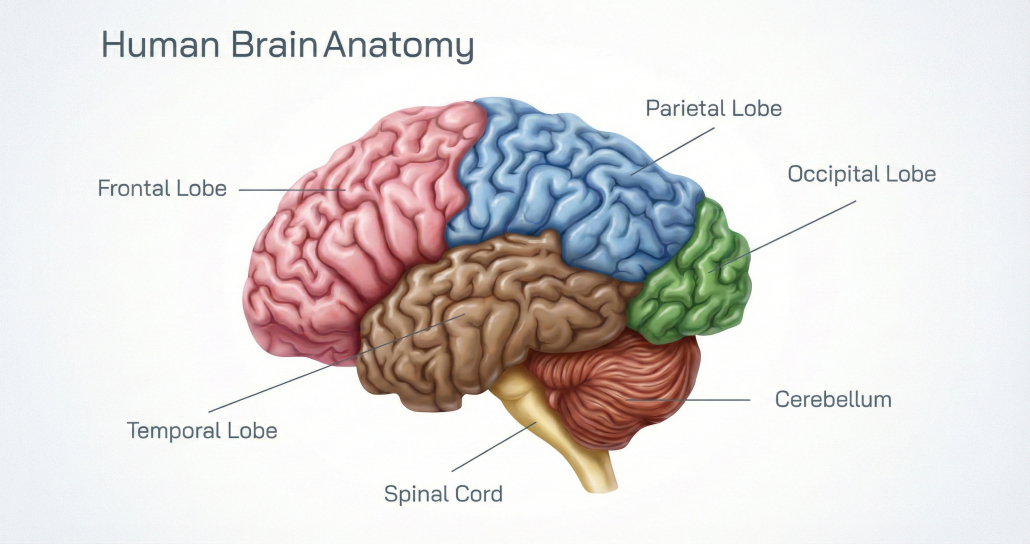
Neurological Note: This analysis reveals how violence targets the brain’s survival instincts to create a “chilling effect”. By labeling these tactics, we perform a Manual Override, allowing the prefrontal cortex to re-engage so you can remain an objective observer rather than an emotional victim
Practical Next Step
The Defensive Drill: Within the next 24 hours, identify one instance in a news cycle where a complex event is blamed on a single person or group (Simple Causation) and practice “Steelmanning” the strongest counter-argument to keep your logic online.
We have been told a lie our entire lives. We are told that “Knowledge is Power.”
In 1995, that was true. When information was scarce, the person with the most facts won. But today, we live in an economy of infinite information. Basic economics tells us that when a resource becomes infinite, its value drops to zero.
The data isn’t the asset anymore. Your attention is the asset.
In the modern world, you don’t win by knowing more. You win by knowing less about the things that don’t matter, so you can dominate the few things that do. This is called Strategic Ignorance.
Here is why your brain physically breaks down under the current load, and the 5 Filters I use to protect my focus.
The Paradox of More Data
We instinctively crave more data because we think it reduces risk. We tell ourselves, “If I just read one more review, or check one more news source, I’ll make the perfect decision.”
This is the “More Data Paradox.” As a marketer for 30 years, I can tell you this is by design. When a consumer is overwhelmed with choices and data, they freeze. This is called Cognitive Overload. When you freeze, you look for a savior—a product, a guru, or a politician—to make the choice for you.
By trying to consume everything, you aren’t becoming informed. You are becoming compliant.
The Neuroscience of Noise
Let’s look at the hardware: your brain.
Your Prefrontal Cortex (PFC) is the CEO of your mind. It handles logic, decision-making, and willpower. But here is the catch: it has a very limited battery life.
Every time you process a Tweet, a headline, or an irrelevant email, you burn glucose. You are spending your “CEO energy” on janitorial tasks.
When your brain is overloaded, it physically cannot engage in Deep Thinking. It switches to “Survival Sorting.” You stop analyzing nuance and start looking for threats. This is why “doom-scrolling” feels exhausting but you can’t stop. You have overloaded the circuit, and your brain is now just looking for the off switch.
Strategic Ignorance vs. Laziness
Does this mean you should put your head in the sand? No. That is laziness.
Laziness is ignoring information because you don’t care.
Strategic Ignorance is ignoring information because it does not serve your objective.
Think of it like a diet. You don’t eat everything at the buffet just because it’s there. You select what fuels you.
We are entering an era where “Low Information” is a competitive advantage. You need to practice the “Spotlight Effect.” You must dim the lights on the 99% of noise so you can shine a massive spotlight on the 1% of signal that actually matters.
The 5 Filters of Relevance
How do we do this? You need a firewall for your mind. I use a system I call the “5 Filters of Relevance.”
1. The Expiration Test
Ask yourself: “Will this information matter in 6 months?”
If the answer is no, it is noise. Most breaking news, celebrity gossip, and Twitter outrage expires in 48 hours. If it won’t matter in December, don’t let it steal your energy in January.
2. The Action Gap
Ask yourself: “Does this information change what I am going to do in the next 24 hours?”
If knowing this information does not change your behavior, it is essentially trivia. It might be interesting, but it is not strategic.
3. The Vividness Trap
Psychologists call this the Availability Heuristic. Your brain judges risk by how scary a story is, not by how likely it is.
If a news report gives you a terrifying anecdote but no statistics, it is designed to hijack your Amygdala. The Rule: If it’s a story without data, ignore it. That’s entertainment, not information.
4. The Incentive Audit
The “Insider” rule is simple: Cui Bono? (Who benefits?)
Does the person telling me this profit from my panic? If a YouTuber, a politician, or a news anchor gets paid based on your engagement, they are incentivized to exaggerate. If the source has a financial motive to scare you, apply a 50% “Skepticism Tax” to everything they say.
5. The Circle of Control
This is pure Stoicism. Ask: “Can I vote on this, buy this, or fix this today?”
If the answer is “No,” then worrying about it is a waste of your biological battery. You can be aware of it, but do not let it enter your “Deep Processing” queue. Save that energy for the problems you can actually solve.
The Next Step: Get the Checklist
We have to get comfortable with not knowing. We have to get comfortable with people saying, “Did you hear about X?” and confidentially replying, “No, I didn’t.”
It requires courage to opt out of the machine. But the result is a brain that is sharper, calmer, and ready to solve actual problems.
I know you understand these filters right now. But in twenty minutes, the algorithm is going to try to hijack your brain again. You need a physical defense.
I’ve put all 5 Filters onto a single-page “Gatekeeper Checklist.” Download it, tape it to your monitor, and do not let information enter your mind without checking its ID first.
Frequently Asked Questions about Strategic Ignorance
What is Strategic Ignorance? Strategic Ignorance is the deliberate practice of filtering out irrelevant information to preserve cognitive resources for high-value decision-making. Unlike laziness (not knowing because you don’t care), Strategic Ignorance is a productivity protocol designed to prevent “Cognitive Overload” and decision fatigue in an information-rich environment.
How do I practice Strategic Ignorance? To practice Strategic Ignorance, apply the “5 Filters of Relevance” to any incoming information:
The Expiration Test: Will this matter in 6 months?
The Action Gap: Does this change my behavior in the next 24 hours?
The Vividness Trap: Is this a scary story (anecdote) or actual data (statistics)?
The Incentive Audit: Does the source profit from my panic?
The Circle of Control: Can I vote on, buy, or fix this issue today?
Why does information overload lead to bad decisions? Information overload depletes the glucose levels in the Prefrontal Cortex (PFC), the part of the brain responsible for logic and willpower. When the PFC is exhausted, the brain shifts control to the Amygdala (the emotional center), leading to impulsive reactions rather than strategic choices. This state is known as “Decision Fatigue.”
https://allenstafford.com/wp-content/uploads/2021/02/Allen-Stafford-Think-Sharper-Logo.png00Allen Staffordhttps://allenstafford.com/wp-content/uploads/2021/02/Allen-Stafford-Think-Sharper-Logo.pngAllen Stafford2026-01-23 01:26:182026-09-23 09:35:31Strategic Ignorance: Why Smart People Ignore 99% of Information
The “Insider” protocol for filtering out 99% of the noise so you can dominate the 1% that matters.
In the modern information economy, knowledge isn’t power—focus is power.
Your brain was not designed to process the infinite scroll of today’s news feeds. Every irrelevant headline, tweet, and notification you consume burns the limited glucose in your Prefrontal Cortex, leaving you with “Cognitive Overload” and decision fatigue before your workday even begins.
You need a firewall for your mind.
The Gatekeeper Checklist is the exact system I use to protect my mental bandwidth. It condenses principles from Information Theory, Behavioral Economics, and Stoicism into a single-page tactical field manual.
Inside, you will get the 5 Filters of Relevance:
The Expiration Test: How to use the “Lindy Effect” to instantly spot disposable noise.
The Action Gap: A mathematical razor to separate “learning” from “trivia.”
The Vividness Trap: How to stop the media from hacking your Amygdala with fear.
The Incentive Audit: The “Insider” method for spotting when you are being manipulated for profit.
The Circle of Control: The Stoic framework for energy management.
We may request cookies to be set on your device. We use cookies to let us know when you visit our websites, how you interact with us, to enrich your user experience, and to customize your relationship with our website.
Click on the different category headings to find out more. You can also change some of your preferences. Note that blocking some types of cookies may impact your experience on our websites and the services we are able to offer.
Essential Website Cookies
These cookies are strictly necessary to provide you with services available through our website and to use some of its features.
Because these cookies are strictly necessary to deliver the website, refusing them will have impact how our site functions. You always can block or delete cookies by changing your browser settings and force blocking all cookies on this website. But this will always prompt you to accept/refuse cookies when revisiting our site.
We fully respect if you want to refuse cookies but to avoid asking you again and again kindly allow us to store a cookie for that. You are free to opt out any time or opt in for other cookies to get a better experience. If you refuse cookies we will remove all set cookies in our domain.
We provide you with a list of stored cookies on your computer in our domain so you can check what we stored. Due to security reasons we are not able to show or modify cookies from other domains. You can check these in your browser security settings.
Other external services
We also use different external services like Google Webfonts, Google Maps, and external Video providers. Since these providers may collect personal data like your IP address we allow you to block them here. Please be aware that this might heavily reduce the functionality and appearance of our site. Changes will take effect once you reload the page.